
Jaggery is an unrefined, non-centrifugal whole cane sugar produced by concentrating sugarcane juice without separating the molasses. It is available in solid, liquid, and granular forms.
Naturally rich in minerals and vitamins, jaggery is considered a healthier alternative to refined sugar and is widely used as a natural sweetener as well as in traditional and regional dishes.
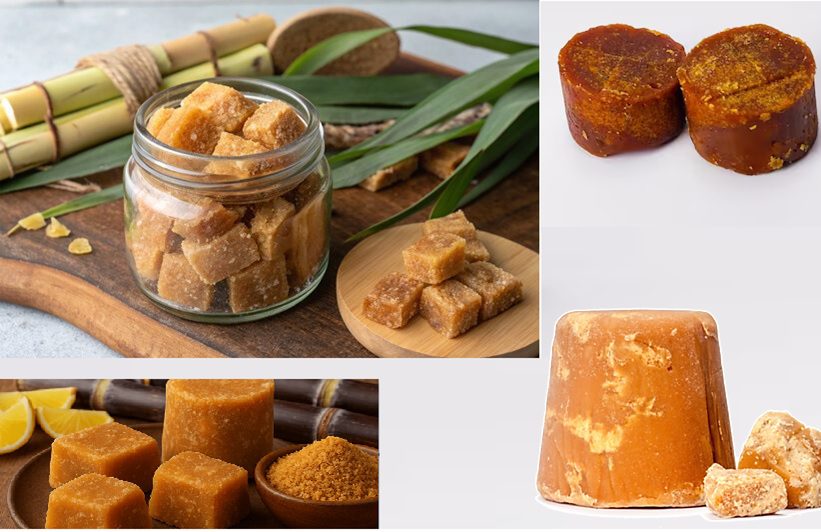
Simple yet effective
Energy: 383 kcal
Carbohydrates: 98.96 g
Total Sugars: 98.13 g
Protein: 0.09 g
Sodium: 3 mg
Potassium: 31 mg
Magnesium: 160 mg
Calcium: 80 mg
Iron: 5.4 mg
The primary differences between jaggery and refined white sugar lie in colour, texture, processing, and composition.
Refined sugar is typically white due to extensive processing and removal of molasses, whereas jaggery ranges in colour from yellow to dark brown, depending on the processing time and method.
In terms of texture, refined sugar is hard and crystalline, while jaggery is naturally semi-solid or granular and does not have a defined crystal structure.
Additionally, jaggery is minimally processed and retains natural molasses, whereas white sugar undergoes heavy refining, resulting in a product that is nearly pure sucrose.
There is a common perception that jaggery has a warming nature (often referred to as taseer), meaning it generates heat as it is metabolized in the body. During winter, when cold weather causes blood vessels to constrict, jaggery may help promote vasodilation and improve blood circulation. This makes its consumption particularly popular in colder months.
However, jaggery can also be consumed during summer. When mixed with water—as in traditional gur ka sharbat—it is widely believed to have a cooling effect on the body, making it suitable for warm weather as well.
Additionally, maintaining a diet rich in high–water-content foods such as fresh fruits and vegetables can help balance any warming effect of jaggery when consumed in moderation. Many people regularly use jaggery as a substitute for sugar throughout the year and find it suitable across all seasons.
As with any dietary choice, it is advisable to listen to your body and consume jaggery in amounts that suit individual needs and comfort.
+91-95-7536-1379
+91-97-3079-0100
procurement@nexusglobalexports.com
sourcing@nexusglobalexports.com
Mumbai | Pune| Indore | Ahmedabad
Any other look alike domains or slight variations or potential typos and are not connected to the official Nexus Global Exports platform